


Coordinate Decorative Details Across Your Collection
Yulentra Christmas Deco supports selected accessory and decorative-detail changes for wholesale, OEM and private label Christmas decoration orders. We work with importers, wholesalers, retail chains and brands adapting existing products for seasonal collections.
Depending on the model, options may include ribbons, bows, berries, pinecones, hanging cords, textile appliques and other decorative components. We review each request against the product’s material, construction and assembly method before confirming feasibility. Selected lighting or movement features require separate model-specific assessment.
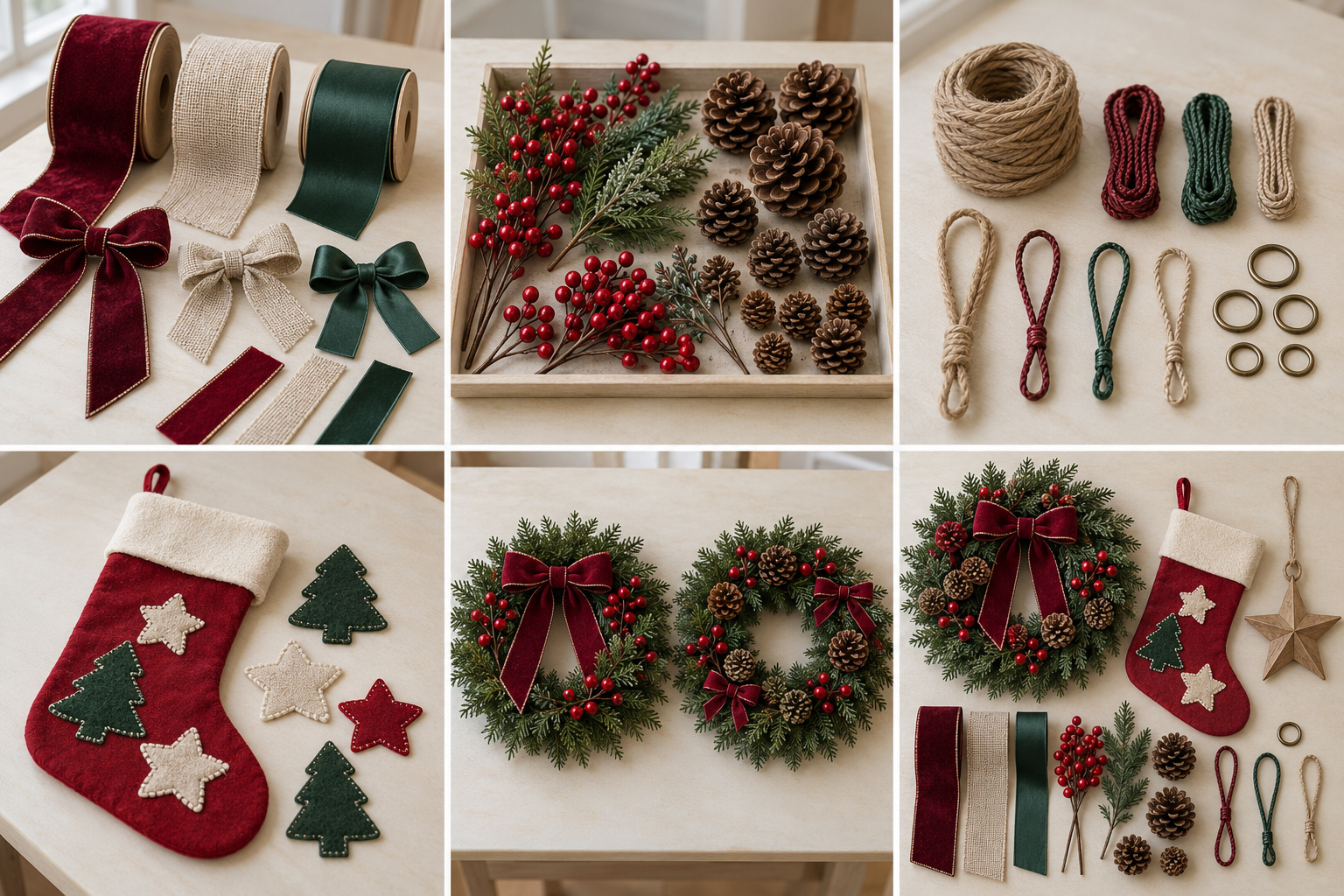 Specify the Components and Their Placement
Please provide a reference image or sample showing the intended arrangement. Identify accessory dimensions, colors, materials, quantities and positions rather than relying only on descriptions such as “fuller” or “more decorative.”
For wreaths and garlands, confirm how berries, pinecones and bows should be distributed. For stockings, identify applique placement and the relationship to seams, cuffs and branding. Hanging ornaments need a suitable cord or loop length and attachment position.
Changes to accessory size or quantity may also require a review of the product’s size and structure.
Review Materials, Color and Attachment Methods
Accessories should suit both the visual design and the supporting product. Ribbon stiffness affects bow shape; heavier components can change balance; projecting details may need additional packaging clearance.
Attachment methods depend on the component and base material. Relevant construction may involve sewing, wire wrapping, suitable adhesive assembly or existing connection points. A decorative component should not be selected solely because it looks suitable in a photograph.
Our material options review helps identify workable combinations. Colors and surface effects should be assessed together, particularly when a collection combines foliage, textiles and painted components.
Approve a Complete Decorated Sample
Loose accessory samples help confirm materials, but the assembled product establishes the final arrangement. During sample development, review component proportions, placement, attachment, overall balance and handling.
The approved reference should identify accessory quantities and any acceptable positioning variation. If a component changes, its replacement should be reviewed before production.
Customized samples generally require around 7–12 days, while more complex requests may take longer. Sample charges depend on component availability, assembly work and the number of versions required.
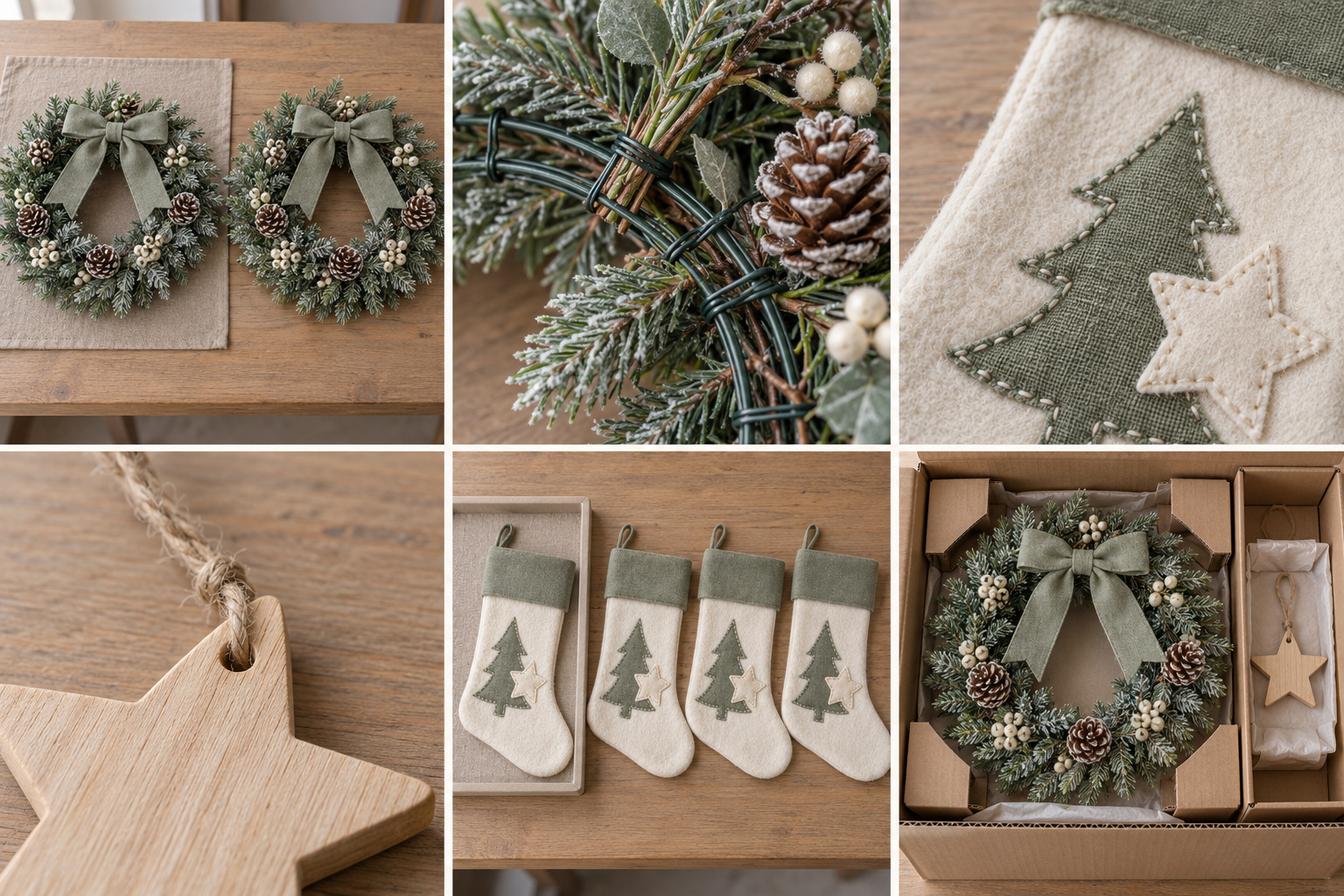 Understand the Effect on Cost, MOQ and Lead Time
Accessory changes affect component purchasing, preparation, assembly time and packing. Increasing the number of bows or decorative clusters can add substantial manual work even when the main product remains unchanged.
MOQ is confirmed by item, component and customization. Separate colors or specially sourced accessories may carry their own purchasing minimums. Combining several designs in one order does not automatically remove these requirements.
Customized bulk production commonly requires around 35–50 days. Peak-season schedules may extend to approximately 45–60 days, depending on approvals, component availability and production mix.
Check Assembly and Protect Decorative Components
Production checks follow the approved sample and specification. Relevant points include accessory count, placement, color, visible workmanship, attachment strength and completeness. Finished products are randomly inspected before packing.
Packaging must accommodate bows, projecting berries, pinecones and other details without unnecessary pressure or contact. Suitable protective packaging is reviewed against the completed product.
For quotation, send the product reference, accessory requirements, placement images, quantity per design, packaging needs, destination and target arrival date.