


Match the Finish to the Product and Material
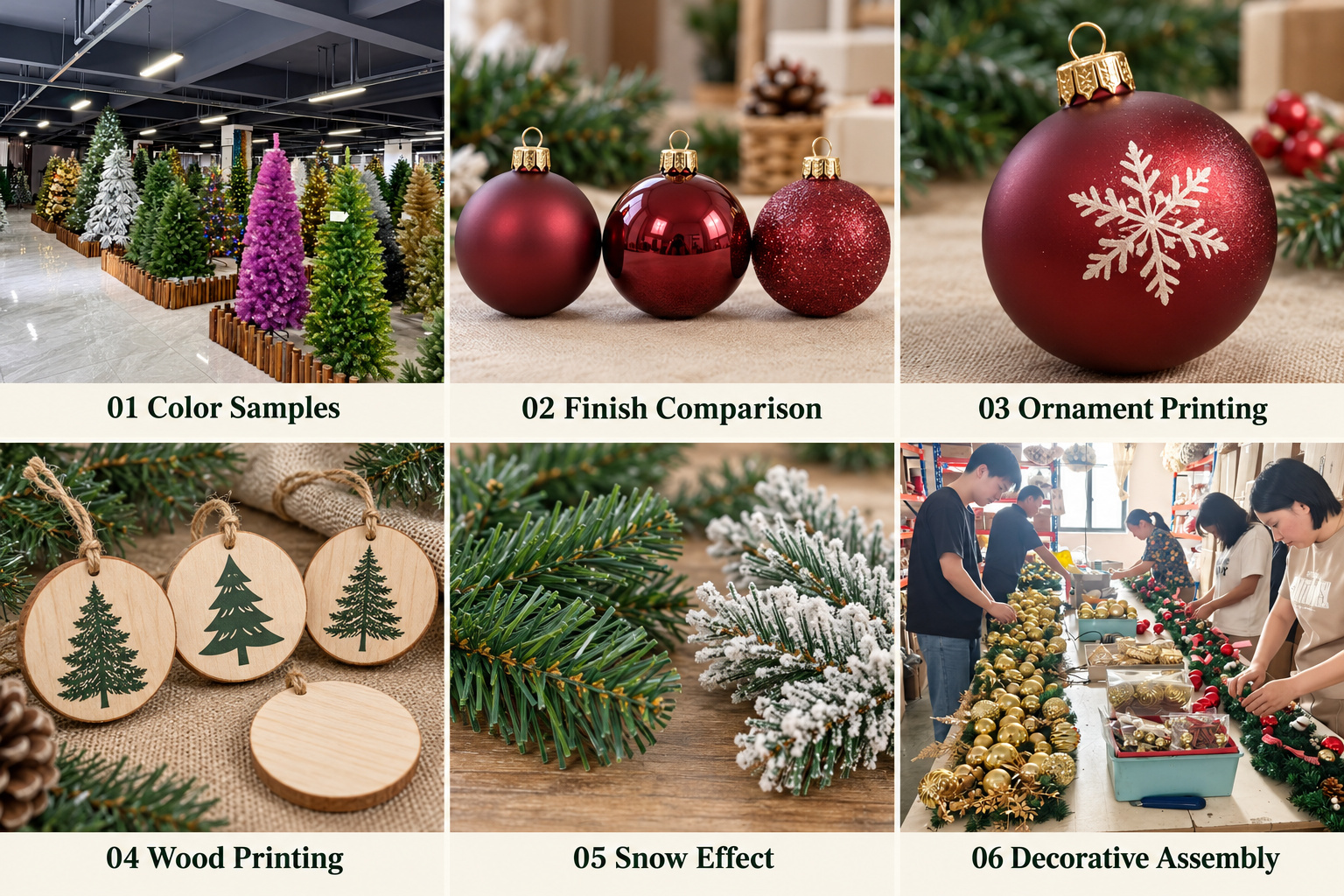
Painting, printing and surface finishing affect how a Christmas decoration looks across a complete collection. A red coating on a plastic ornament will not necessarily match red fabric, painted wood or a resin component under the same lighting.
For importers, wholesalers and private label buyers, we review the substrate, intended appearance and order quantity before confirming a finishing method. Options may include solid painted colors, matte or gloss surfaces, printed artwork, glitter decoration and snow effects, depending on the selected product. Availability is confirmed by model and sample.
Confirm Color and Appearance Before Sampling
Send a physical reference, color reference code or existing product sample together with the required finish. Photographs help explain the direction, but screen images alone are insufficient for final color approval.
The sample review should establish:
- Which surfaces receive color or decoration.
- Whether the appearance is matte, glossy, textured or translucent.
- The coverage and placement of glitter or snow effects.
- Which areas must remain clear for assembly or attachment.
For coordinated collections, our Custom Colors & Finishes page covers matching requirements across different products. Material differences should be reviewed before committing to a uniform appearance.
 Check Artwork Against the Actual Surface
A design that looks clear on a flat artwork file may lose detail on a curved bauble, textured resin surface or small wooden ornament. Print size, positioning and the shape of the printable area need confirmation before sampling.
Provide vector artwork where available, required colors and a position reference. Fine lines, small lettering and designs crossing a curved surface may require adjustment. We review these points before approving the sample rather than assuming every design can transfer unchanged.
For branding requirements, Logo & Artwork Customization explains the information needed to confirm artwork and placement.
Control Coverage, Drying and Assembly Contact
Surface preparation depends on the material and existing condition. Dust, rough edges or surface residue can affect coating appearance and print definition. Preparation therefore needs to suit the component before decoration begins.
Painted or printed components must have sufficient drying or curing time for the selected process before handling and packing. Attachment areas also require attention: a decorative coating should not prevent parts from fitting together or interfere with the intended fixing method.
Additional colors, repeated coating stages, masked areas and hand-applied decoration can increase handling time, sample revisions and production cost.
Compare Production Against the Approved Sample
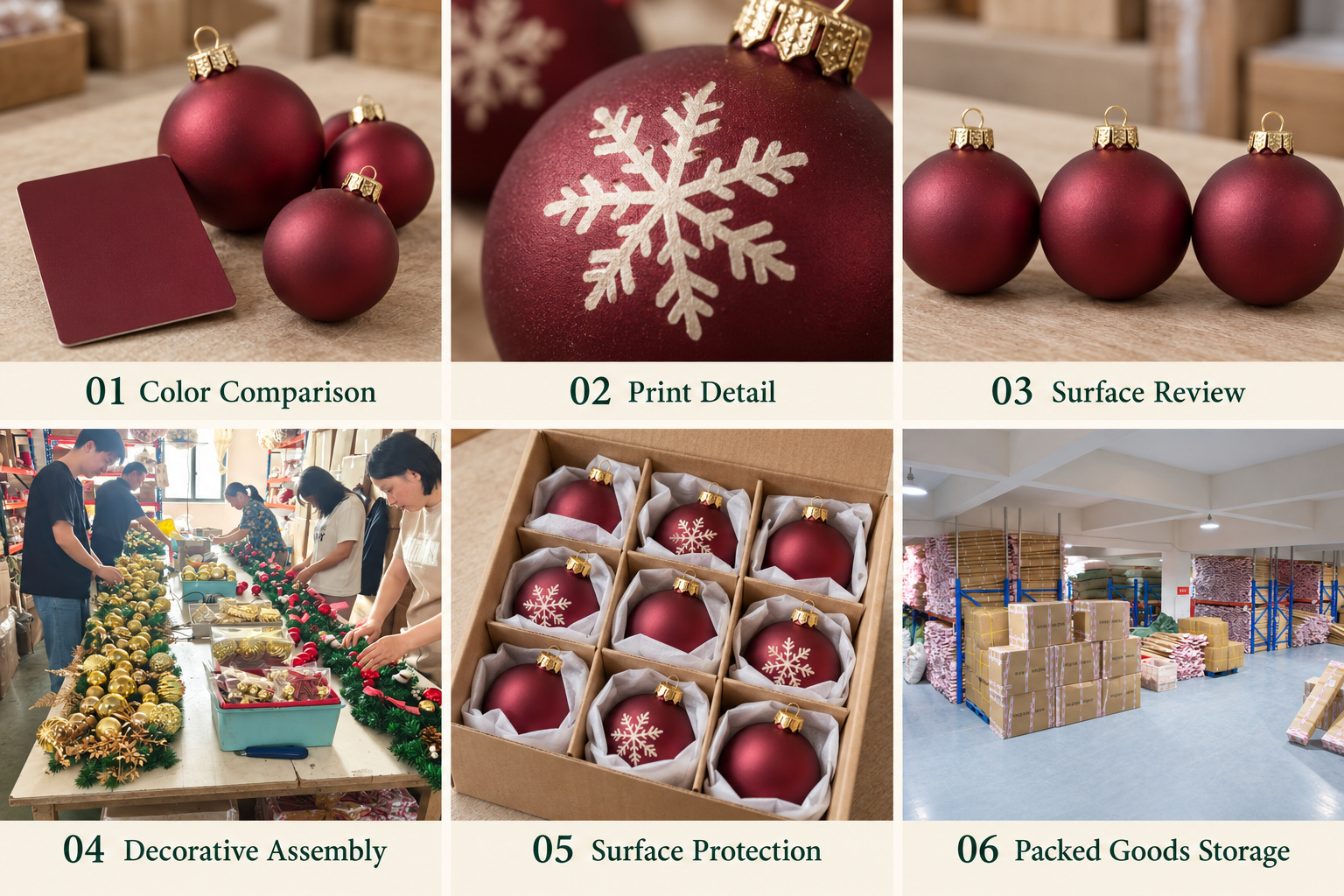
Production checks should follow the agreed physical sample and written specifications. Relevant points include color consistency, coverage, visible marks, print position, pattern clarity and decoration placement.
Checks vary by finish. Gloss surfaces can show scratches clearly; matte coatings may reveal rub marks; glitter decoration requires an agreed appearance and shedding expectation. Any special adhesion, rubbing or other testing requirement should be discussed before quotation, including the method and acceptance criteria.
Our Quality Inspection page outlines the wider product checks that accompany appearance review.
 Protect Finished Surfaces and Plan the Order
Packing must prevent decorated surfaces from rubbing against adjacent products or carton walls. Depending on the item, separators, individual wrapping or fitted inserts may be needed. Packaging materials should also be checked for contact marks on the selected finish.
For a quotation, send product references, material, dimensions, finish requirements, artwork, quantity per design, packaging preference and required shipment date. MOQ, sample cost and lead time depend on the product and finishing complexity. B