


Textile Production Based on the Approved Construction
Yulentra Christmas Deco supports textile cutting and sewing for Christmas decoration wholesale, OEM and private label orders. For Christmas stockings and suitable fabric decorations, this stage determines the finished proportions, seams, cuff arrangement, hanging loop and placement of sewn details.
We work from the confirmed material specification and approved sample. Similar-looking fabrics can behave differently during cutting and sewing, so construction should be reviewed using the intended materials before bulk production.
Prepare Fabrics and Confirm Cutting Dimensions
Preparation starts with the agreed fabric for each part of the product. A stocking may combine different materials for the body, cuff, appliques and hanging loop, with a lining included only where specified.
Before cutting, the required size, shape and component arrangement need to be clear. Cutting dimensions must account for seam allowances and the intended finished measurements. Fabric direction and visible patterns also affect how panels should be arranged.
Our materials and components preparation establishes the inputs used for production. Proposed fabric substitutions require review before cutting begins.
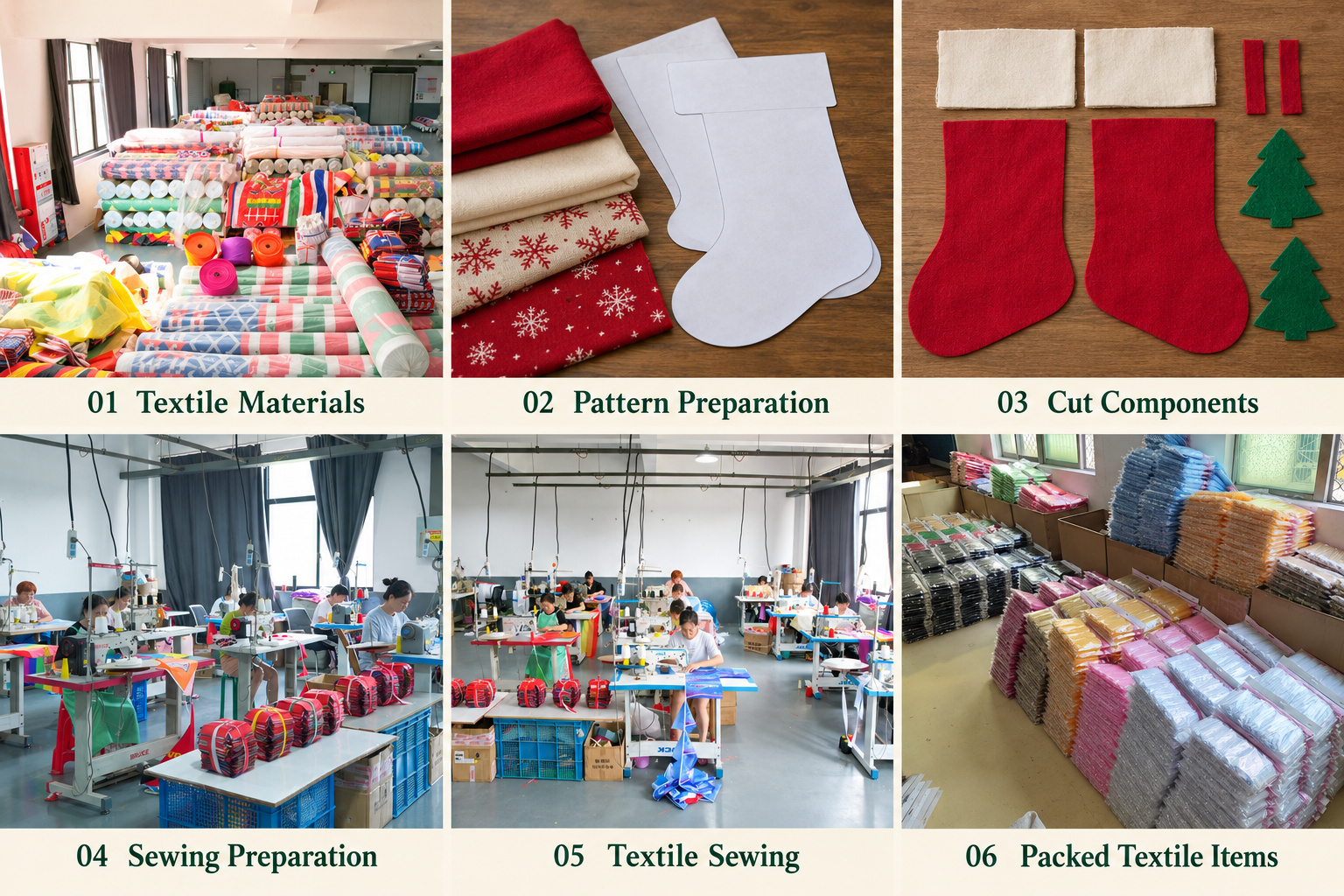 Sew Seams, Cuffs and Hanging Loops
Sewing brings the cut parts into the approved shape. Relevant details include seam alignment, edge finishing, cuff position and the connection between the hanging loop and the product body.
Uneven panel alignment can change the outline, while bulky seams can affect appearance and folding. The selected material thickness and combination influence how these areas should be assembled.
Hanging loops require consistent placement and secure attachment appropriate to the agreed construction. Any specific load requirement needs separate confirmation; appearance alone does not establish carrying strength.
Position Appliques, Branding and Labels
Appliques, embroidery and labels must be coordinated with the cutting and sewing sequence. Their position should be confirmed against the finished product rather than an unfinished panel without seam references.
For logo and artwork customization, buyers should provide dimensions, orientation and placement instructions. A label positioned too close to a seam or cuff fold may become partly concealed after assembly.
Some decoration needs to be completed before the product is closed. Changes made after sewing has started can therefore require additional handling or rework.
Approve a Finished Textile Sample
A complete sample allows buyers to review dimensions, shape, material combinations, seams, decorative placement and labeling together. Check the stocking opening, cuff, hanging loop and interior finish where applicable.
During sample development, identify critical measurements and acceptable variation. Consolidated feedback helps distinguish necessary changes from details already approved.
Customized samples generally require around 7–12 days, while complex construction or decoration may take longer. Sample charges and timing depend on the materials and work required.
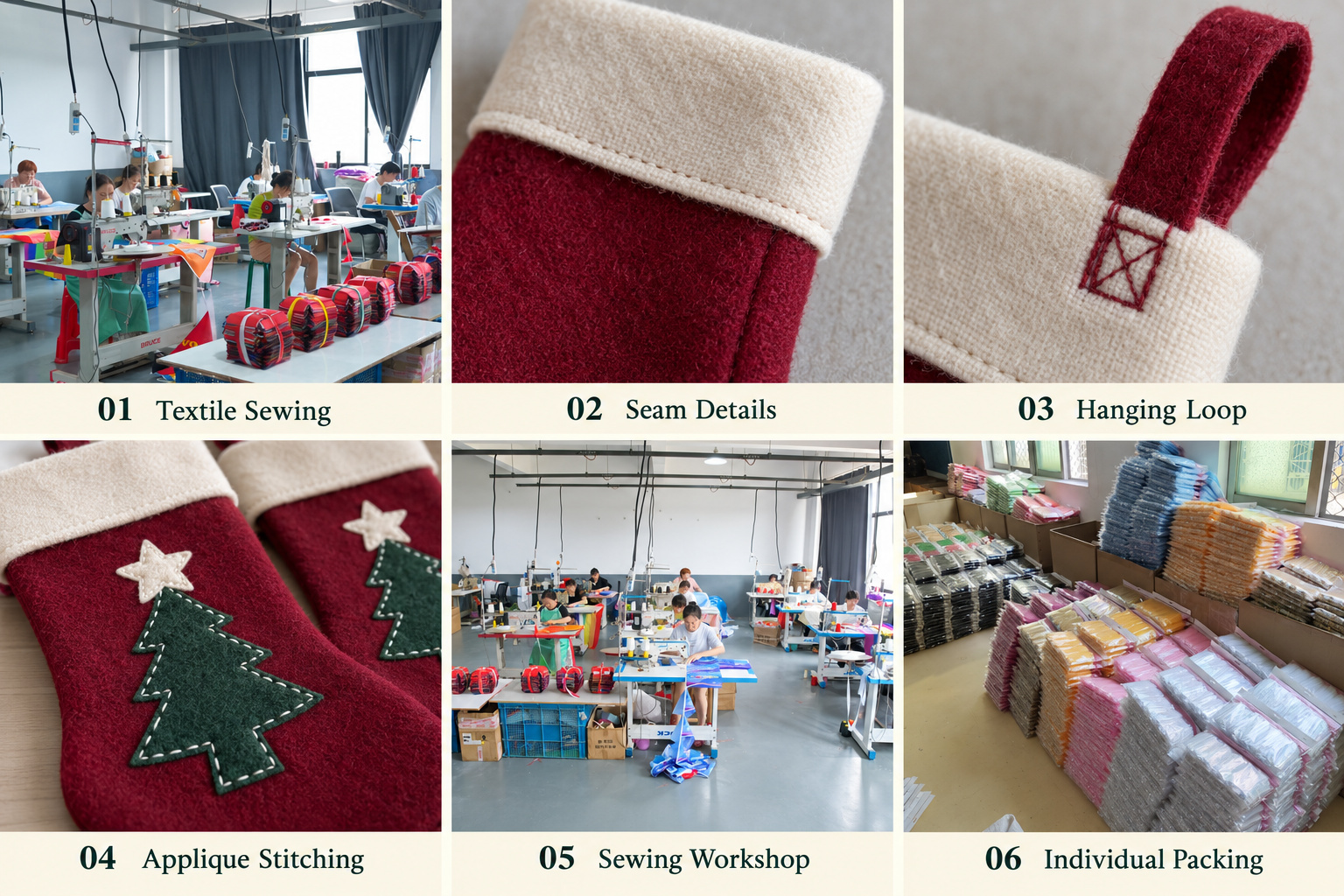 Check Workmanship and Prepare for Packing
Production checks follow the approved sample and specification. Relevant points include finished dimensions, shape, seam condition, cuff alignment, hanging-loop attachment, loose threads and accessory completeness.
Finished products are randomly inspected before packing. Folding should accommodate appliques, labels and raised decorative details without unnecessary pressure. Individual packing and set quantities follow the confirmed order requirements.
For quotation, send the product reference, finished dimensions, fabric requirements, decoration and label details, quantity per design, packaging needs and target delivery schedule. These details allow cutting, sewing work and production timing to be assessed.