


Bring Components Together Against the Approved Sample
Final assembly determines whether separate materials, structural parts and decorative accessories form a consistent finished product. For Christmas wreaths, garlands, ornaments, stockings and decorative scenes, small differences in placement or attachment can change the appearance of an entire order.
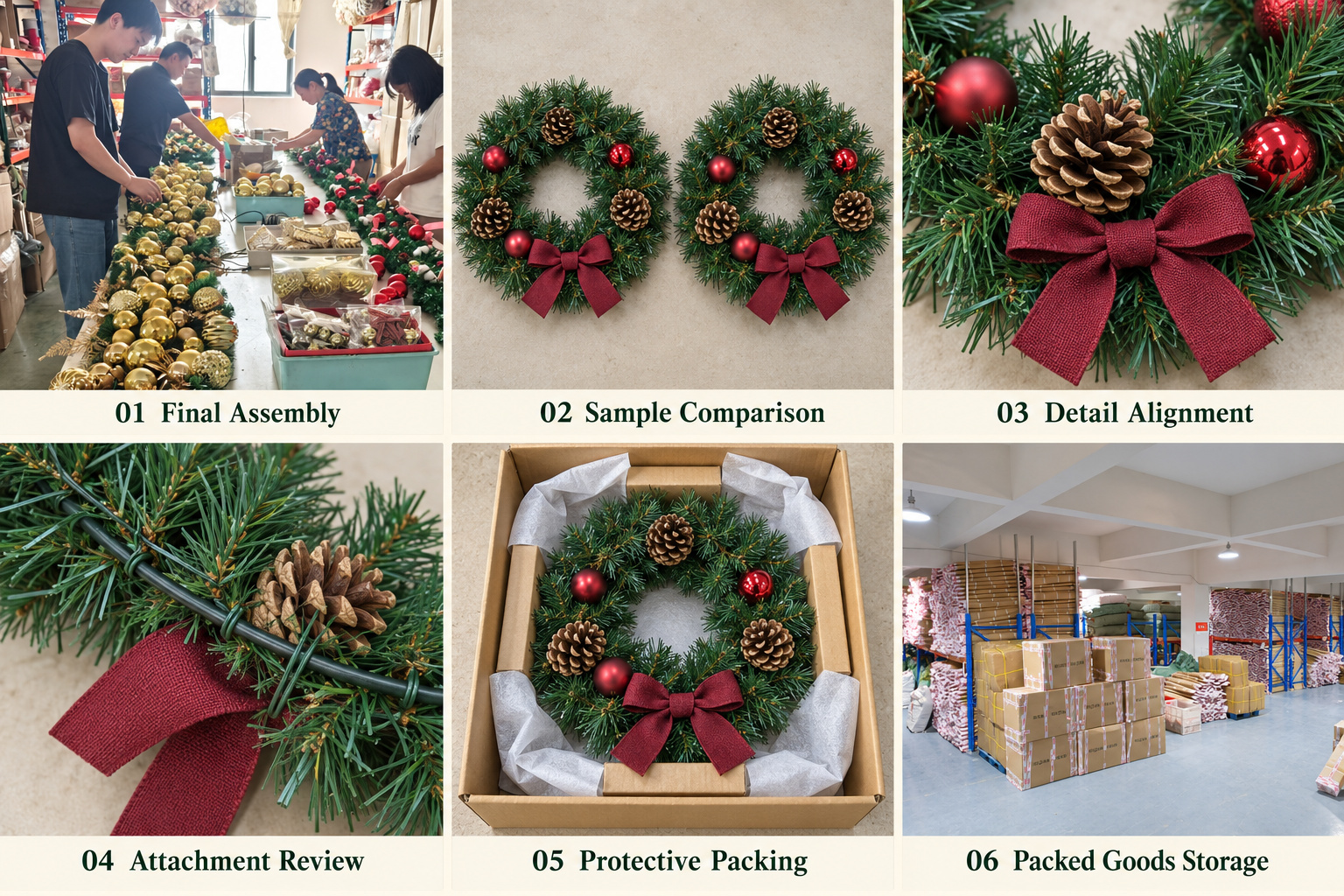
We support assembly and detail finishing for wholesale and OEM Christmas decoration orders according to the selected model. Before production, the sample should establish the component combination, overall shape, attachment positions and finished presentation. Product-specific requirements take priority over a single assembly method applied across every category.
Confirm Component Placement and Assembly Order
Assembly starts with matching the required parts to the confirmed design. Similar-looking components can differ in size, finish or fixing method, so substitutions need review before use.
The assembly reference should clarify:
- The position and direction of bows, berries, pinecones and ornaments.
- Spacing and distribution of decorations on wreaths and garlands.
- Hanging-loop placement and the intended display orientation.
- The relationship between bases, figures and other decorative components.
- Access to switches or connectors on illuminated models.
Our Custom Accessories & Decorative Details page covers accessory selection and placement requirements. Assembly planning then establishes which components must be fitted first to avoid obstructing later work.
 Match the Fixing Method to the Materials
Wire ties, stitching, adhesive or mechanical connections may be appropriate depending on the product. The choice needs to account for component weight, contact area, surface finish and expected handling.
A fixing point should hold the decoration in its intended position without creating a visible defect or damaging nearby materials. On foliage products, exposed wire ends and bulky ties need attention. On textile items, attachment should avoid unwanted puckering or visible loose stitching. Rigid decorative components require review of contact surfaces and alignment.
For models combining several materials, a revised coating, fabric or accessory can affect attachment. Changes should be checked through Sample Development before they enter bulk production.
Finish the Details Buyers Notice
After components are attached, finishing focuses on the product’s agreed presentation. Relevant work may include trimming loose threads, removing visible adhesive residue, arranging foliage, straightening hanging loops and adjusting accessory direction.
The aim is consistency with the approved sample. Hand-arranged branches and natural pinecones will have variation, so buyers should identify which appearance points are critical and which allow reasonable differences.
Finished dimensions also need a defined reference. A wreath measured before shaping may differ from its display diameter after the branches are arranged.
Check the Complete Product Before Packing
The assembled item requires review as a whole. Checks should cover overall shape, component count, accessory position, visible fixing points and the intended hanging or standing arrangement.
Where applicable, the review also includes accessible controls and lighting operation after assembly. Product-specific inspection methods and acceptance criteria should be agreed in advance rather than inferred from appearance alone.
Our Quality Inspection page explains how these checks fit into the wider order review.
 Preserve the Assembly During Packing and Shipment
Packaging should protect the finished arrangement as well as the main product. Protruding bows, hanging ornaments and rigid accessories need clearance from pressure points. Loose components should not move against painted or printed surfaces.
Packing trials help establish whether the product needs separators, restraint or reshaping instructions after unpacking. These requirements can affect carton size, packing time and shipping volume.
For a quotation, send product references, dimensions, accessory details, quantity per design, packaging requirements and target shipment date. Assembly complexity, fixing methods and sample revisions influence cost, MOQ and production scheduling. Confirming these details early gives the bulk order a clear production reference.