


Prepare the Right Inputs for Each Product
Yulentra Christmas Deco prepares materials and components according to confirmed specifications for wholesale, OEM and private label orders. This stage establishes what enters production, from foliage and wire structures to fabrics, ornament bodies, hanging parts and decorative accessories.
Our Christmas product categories use different constructions. A material suitable for a stocking cannot be assessed in the same way as a wreath frame or a snow globe component. Preparation therefore follows the selected model, approved sample and order requirements.
Translate the Approved Sample into Material Requirements
Before production, the material combination must be clear enough to reproduce. Relevant details include material type, dimensions, color, finish, component quantity and connection requirements.
A finished sample may conceal important differences. Similar-looking branches can have different foliage constructions, while matching fabrics can differ in thickness or backing. These details should be resolved before materials are allocated.
For proposed substitutions or specification changes, our material options review helps identify what needs buyer confirmation. Availability alone does not establish that an alternative is suitable.
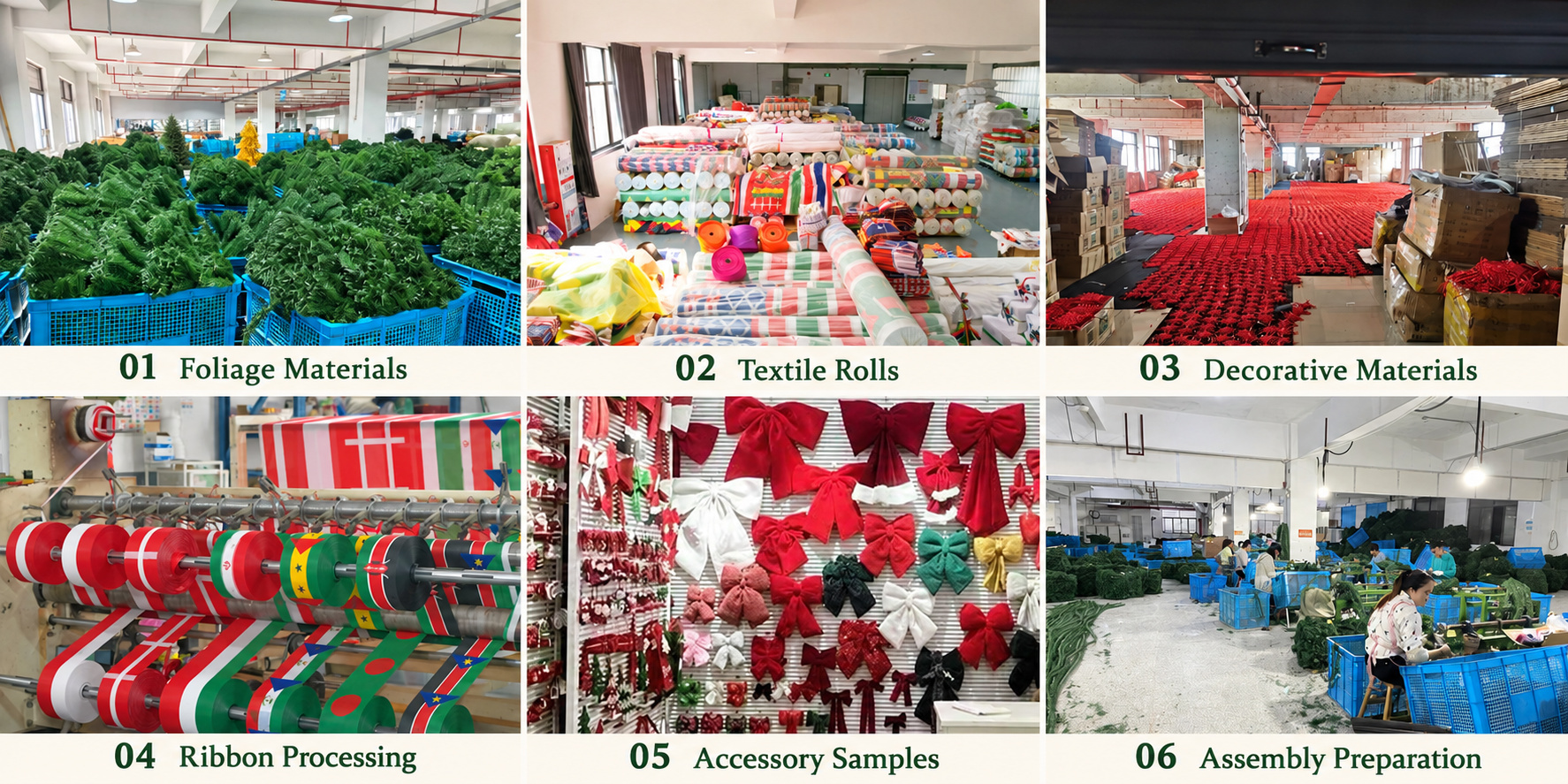 Check Incoming Materials and Visible Condition
Incoming checks compare materials and components with the confirmed specification. Depending on the item, this includes appearance, color, dimensions, surface condition and suitability for the intended assembly.
Textiles are reviewed against the agreed fabric and color reference. Foliage and decorative components are checked for relevant shape, visible damage and consistency. Hanging parts, frames and other fittings need to correspond to the selected product.
Where an issue could affect the finished result, it should be resolved before the material is used. Product testing requirements are discussed separately according to materials, buyer specifications and destination market.
Match Components Before Assembly Begins
Component compatibility influences how efficiently a product can be assembled and whether it retains the approved appearance.
For foliage decorations, branches, frames, berries, pinecones and ribbons need to suit the intended arrangement. Textile items require compatible fabric layers, trims, appliques, hanging loops and labels. Decorative assemblies depend on correctly fitting bodies, bases and accessories.
Preparation should account for the complete product rather than checking each part in isolation. Our product assembly and detail finishing requirements help determine which dimensions and connections matter before assembly.
Separate Variants and Confirm Required Quantities
Orders containing several colors, sizes or designs need clear component allocation. Similar accessories should remain distinguishable so the wrong ribbon, label or decorative detail does not enter an otherwise correct product.
Required quantities follow the agreed product configuration and set arrangement. Changes to accessory counts or material combinations can affect purchasing minimums, preparation work and cost.
For seasonal orders, component availability also influences scheduling. Late changes may require further sourcing or sample review, so material decisions should be settled before the relevant production work is committed.
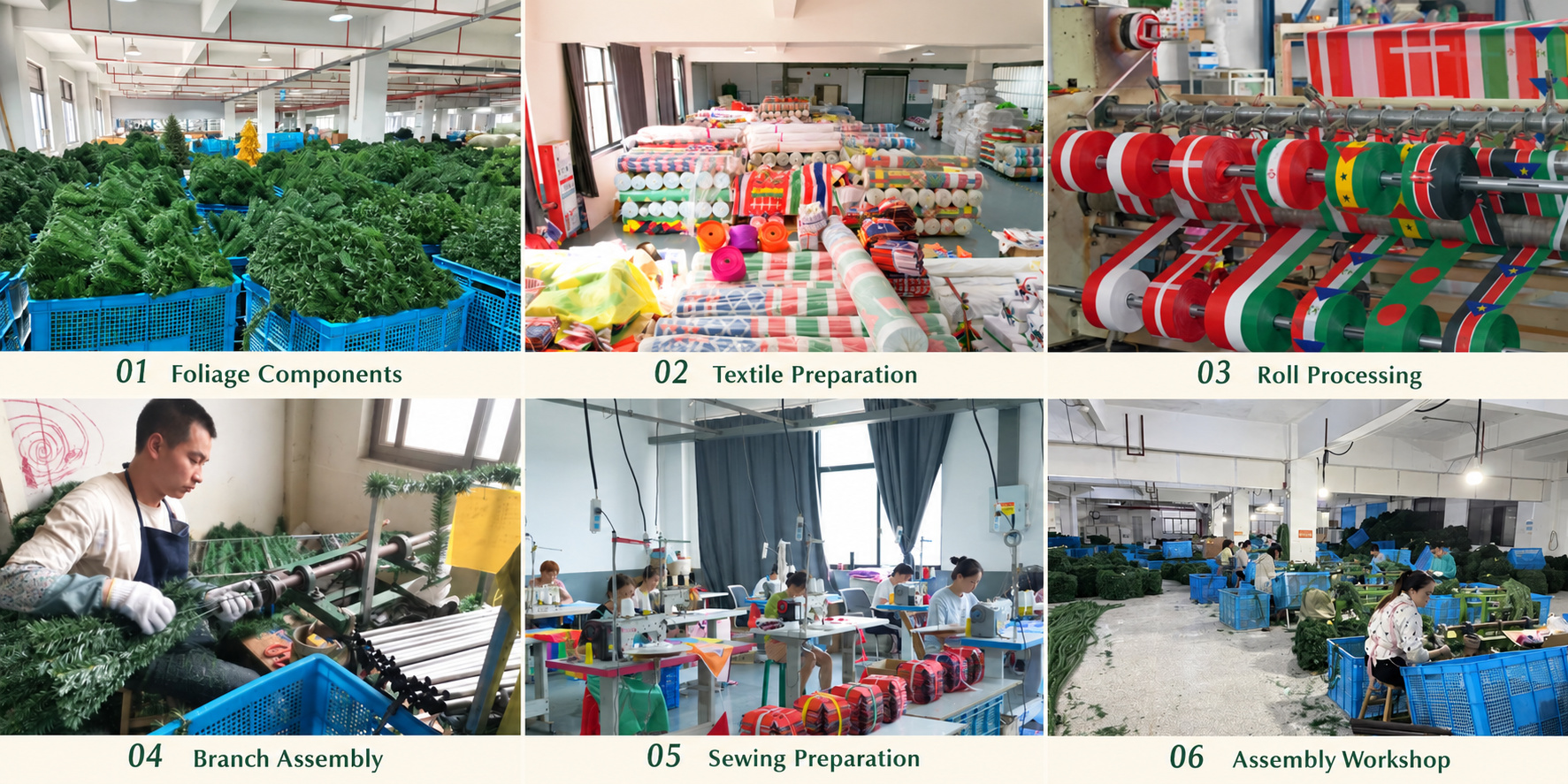 Carry the Confirmed Materials Through Production
Material preparation connects the approved specification with subsequent processing, assembly and quality inspection. Later checks assess whether the selected inputs produce the agreed appearance, dimensions, workmanship and applicable function.
Material choices also affect protection. Fragile components, decorated surfaces and projecting accessories need appropriate handling and packaging consideration before finished goods are packed.
For a production review, send the product reference, required materials, component details, quantity per variant, packaging requirements and target delivery schedule. Identify any mandatory material requirements early so feasibility, sample needs and sourcing time can be assessed.