


Assemble Components Around the Approved Product
Yulentra Christmas Deco supports product-specific assembly for wholesale, OEM and private label Christmas decoration orders. Relevant products include Christmas villages, snow globe bases, decorative scenes and selected ornaments using resin or mixed-material components.
This stage brings prepared parts together according to the confirmed construction. The assembly scope depends on the model and available components; supplying resin decorations does not mean every component is cast or molded in-house.
For importers, wholesalers and retail buyers, the priorities are consistent appearance, correct component fit, secure attachment and suitable protection.
Confirm Parts, Materials and Connection Points
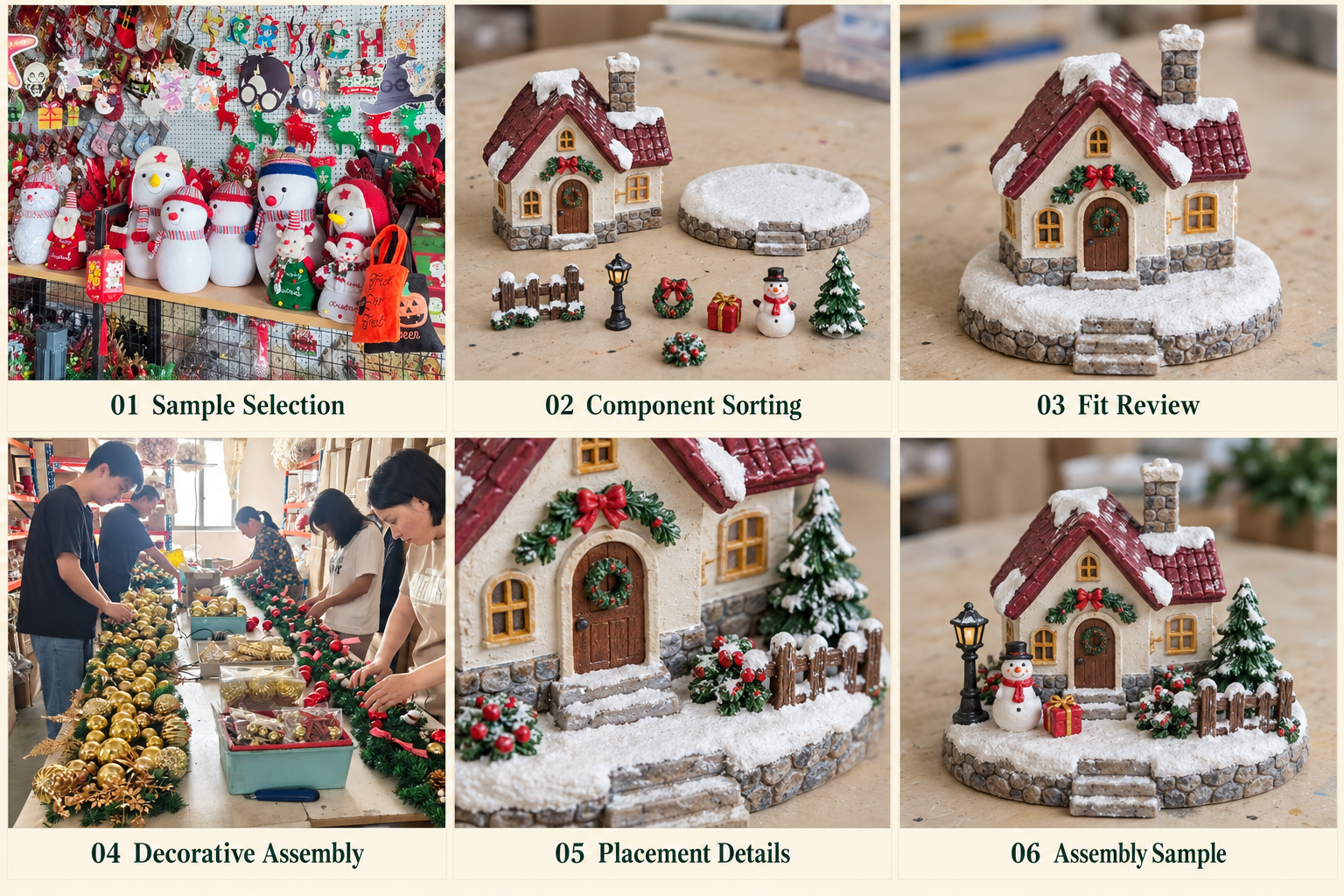
Before assembly, identify the main body, base, decorative pieces and accessories required for each model. Dimensions, orientation, material combinations and attachment positions should correspond to the approved sample.
Parts that appear similar may differ in contact area or fit. A base, miniature scene or decorative accessory must suit its adjoining component without forcing the connection or changing the intended position.
Our materials and components preparation review establishes the inputs. Proposed replacements need assessment before use, particularly when they affect weight, appearance or assembly.
 Review Fit Before Permanent Attachment
Components should be checked together before permanent attachment. Relevant points include alignment, contact surfaces, visible gaps and clearance around adjacent details.
A small positioning difference can change the appearance of a village scene or prevent another part from fitting correctly. Assembly should follow an agreed arrangement rather than relying on individual interpretation.
Attachment methods are selected according to the materials, contact area and construction. Adhesive assembly or other connections require model-specific confirmation. Snow globe sealing, liquid filling and electrical connections are separate operations and are not assumed to be included in every assembly project.
Control Decorative Placement and Surface Handling
Painted details, miniature accessories and projecting features need careful handling during assembly. Contact with adjoining parts can mark a finished surface or place pressure on a fragile detail.
The approved reference should establish the direction, quantity and position of visible accessories. Where several designs share similar components, the parts must remain distinguishable to avoid incorrect combinations.
Related product assembly and detail finishing requirements help coordinate these details with the complete product. Lighting or movement features are reviewed only for applicable models.
Approve the Complete Assembled Sample
A finished sample allows buyers to assess appearance, proportions, component fit, stability and accessory completeness together. Loose parts alone cannot establish the final result.
During sample development, identify any critical positions or acceptable variations. Changes to a base or decorative arrangement may require another assembly review.
Customized samples generally require around 7–12 days, while complex development may take longer. Charges and timing depend on component availability, preparation and revisions.
 Check Finished Assemblies and Packing Requirements
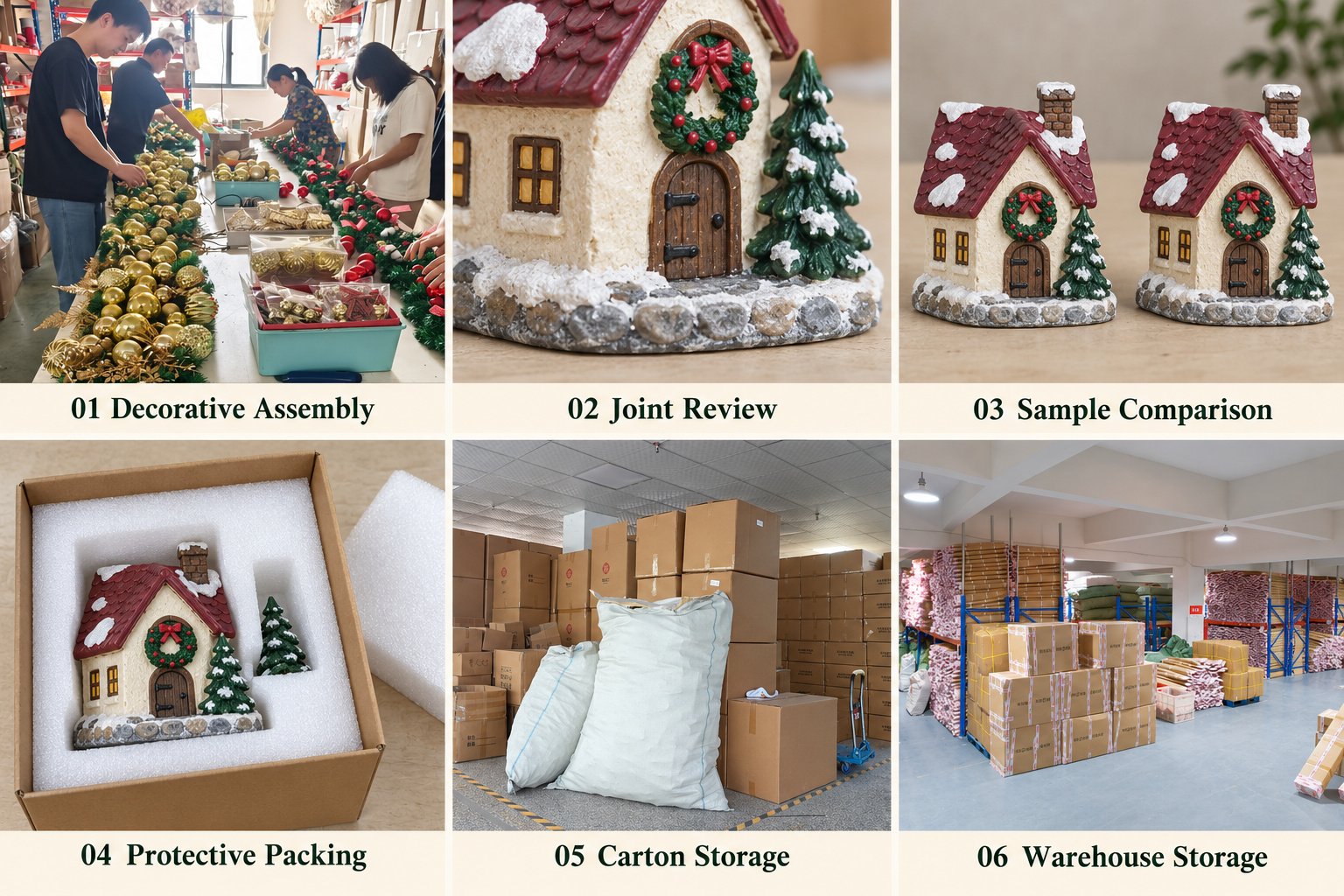
Finished products are randomly inspected against the approved sample and specification. Relevant checks include visible workmanship, component position, attachment condition, stability and applicable functions.
Packaging should support suitable areas of the product while leaving clearance around projecting details. Our protective packaging review considers movement, surface contact and removal from the box.
For quotation, send the product reference, component materials, dimensions, assembly changes, quantity per design, packaging requirements and target delivery schedule. Component complexity, manual assembly and protection requirements all influence cost and production planning.