


Confirm the Lighting Configuration Before Assembly
LED assembly affects the appearance, operation and packing of illuminated Christmas products. For importers, wholesalers and private label buyers, the lighting configuration needs to be agreed alongside the decoration itself.
We review lighting requirements for selected Christmas lights, trees, wreaths, garlands and illuminated decorative models. The power source, LED color, lighting mode, wire routing and control arrangement depend on the product. Available configurations are confirmed by model and sample before bulk production.
A reference photograph can explain the desired effect, but it cannot confirm electrical specifications or suitability for the intended market.
Match Components to the Confirmed Model
Before assembly, the order specification should identify the light set, power supply arrangement, connectors and controls. Battery-operated, USB-powered and adapter-powered versions require different components and checks; these options are reviewed individually rather than treated as interchangeable.
Key confirmation points include:
- LED color and distribution across the decoration.
- Required operating voltage and compatible power source.
- Steady lighting or specified lighting modes.
- Switch, timer or controller requirements, where applicable.
- Cable length, connector position and access to battery compartments.
Component selection forms part of Materials & Components review. Outdoor use, water resistance or destination-market compliance must be assessed separately for the selected configuration.
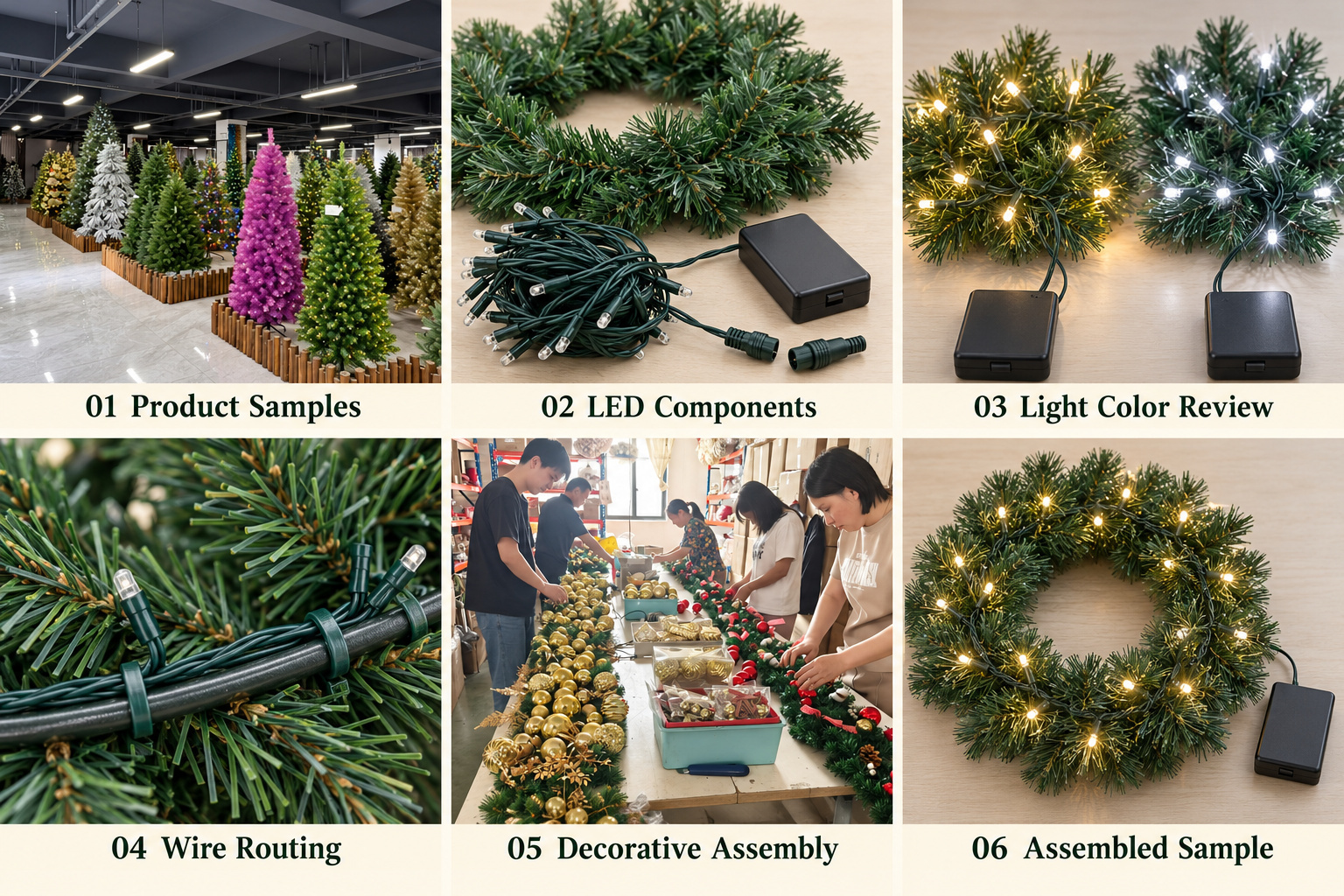 Route and Secure Wiring Without Damaging the Decoration
Wire placement should follow the approved sample while allowing the product to be assembled, handled and packed. On wreaths and garlands, exposed loops or tight bends can catch on decorative accessories. On sectional trees, connections need to remain accessible during setup.
We review fixing positions, cable clearance and connector access during sampling. Wiring should avoid sharp edges, trapped sections and unnecessary tension at attachment points. Switches and battery covers must remain usable after decorative components are fitted.
Changes to the frame, accessory placement or packaging can require a further routing review, even when the light set stays unchanged.
Check Operation on the Assembled Product
Function checks should use the specified compatible power source. Relevant checks include whether the LEDs illuminate, switches operate and agreed lighting modes respond correctly. Where a timer or controller is included, its operation needs a defined checking method.
The assembled product also requires a visual review for unlit sections, unexpected flickering, uneven light distribution and loose connections. Checking a light set before fitting does not replace checking it after assembly.
Inspection scope, sampling arrangements and any extended operation requirements should be agreed before production. Function checks alone do not establish certification, outdoor suitability or a product lifetime claim.
Use the Approved Sample as the Production Reference
Sample approval should cover both the illuminated appearance and the physical configuration. Confirm the light color, component placement, controls, cable arrangement and packaging together.
Photographs or video can support review, while a physical sample allows buyers to assess access, handling and assembly. Our Sample Development process provides the reference for resolving changes before the bulk order proceeds.
During Quality Inspection, the finished configuration should be compared with the agreed sample and specification.
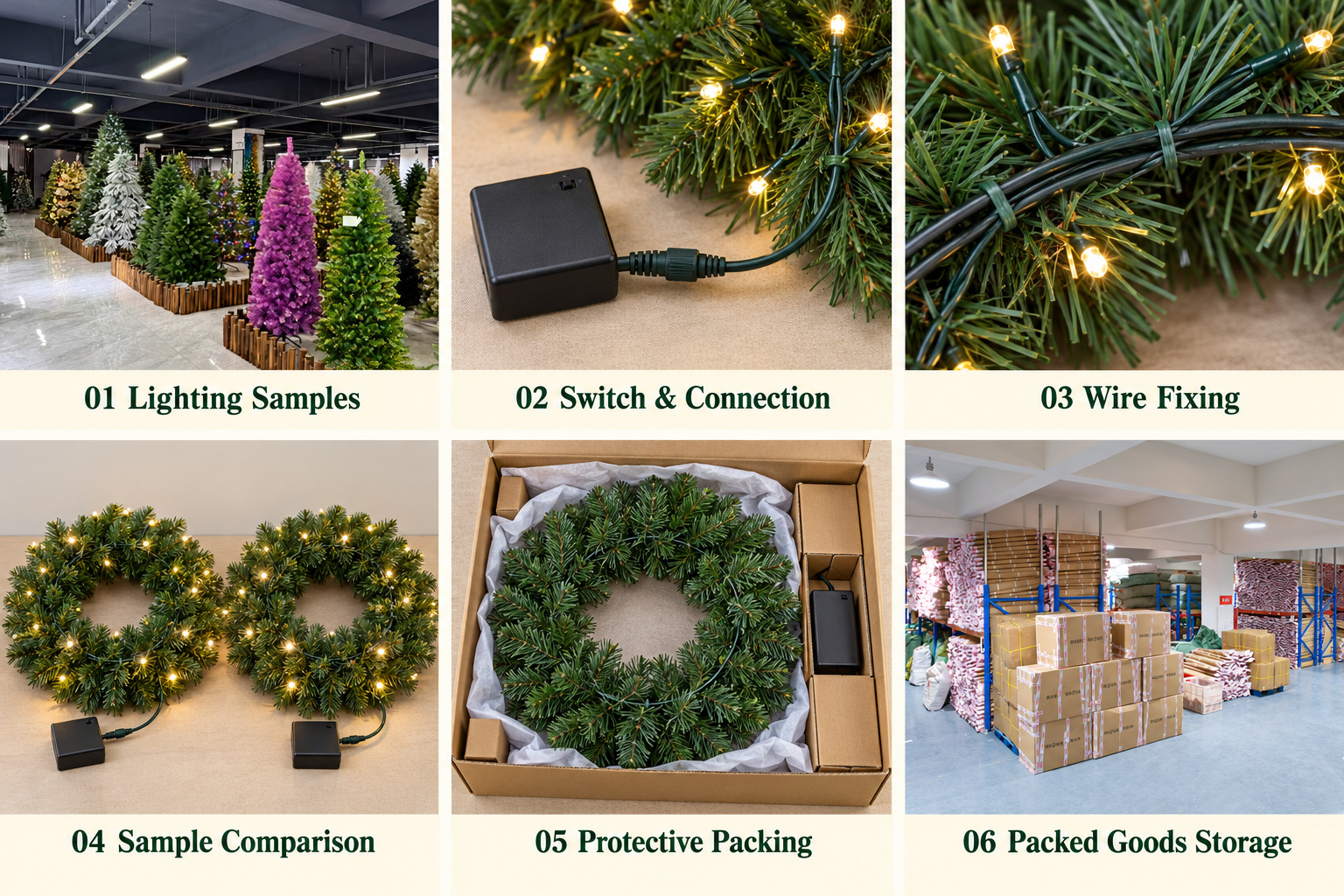 Confirm Packing and Delivery Requirements
Packaging should protect LEDs, wiring and controls from pressure or snagging. Connectors and battery boxes may need separate restraint so they cannot rub against finished surfaces during transport.
For a quotation, send the product reference, quantity, destination market, intended use, power requirements, lighting effect and required shipment date. State whether batteries, adapters or instructions are required. These details affect component availability, sample work, MOQ, packing and production lead time.